Domaine Filliatreau
A Saumur-Champigny mainstay, best known for La Grande Vignolle — a Cabernet Franc vineyard perched on a tuffeau limestone outcrop above the Loire. They also farm a single site in Brézé, organically worked since the 1990s and now moving toward biodynamic certification, producing both red and white Chenin Blanc.
Bernard Baudry
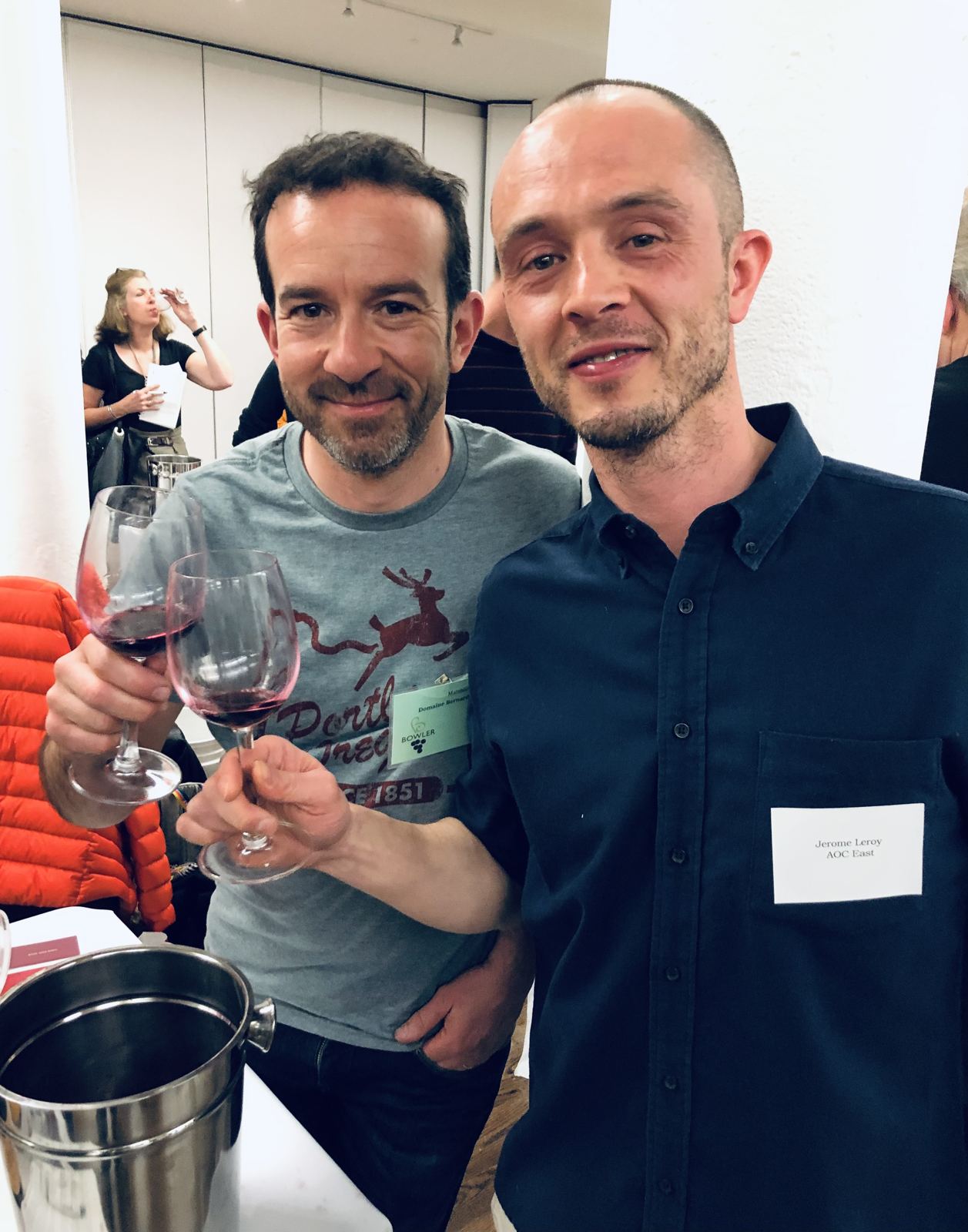
A benchmark Chinon estate since 1975, now run day-to-day by Matthieu Baudry — though his father Bernard is still very much a presence at the domaine. Certified organic since 2006, unfined and unfiltered, across 32 hectares of gravel, limestone-clay, and sandy-limestone terroir in Cravant-les-Coteaux — a classic, earthy expression of Cabernet Franc that helped define the appellation.
Domaine de la Pépière
Founded by Marc Ollivier in 1984 near Nantes, farmed organically from day one — almost unheard of in Muscadet at the time — and now certified biodynamic under his successors, Rémi Branger and Gwénaëlle Croix. Hand-harvested Melon de Bourgogne off granite and gneiss soils, aged sur lie. Proof that Muscadet can be a serious, age-worthy white rather than just an oyster wine.
Olga Raffault
Five generations deep in Savigny-en-Véron, between the Loire and the Vienne, now run by Olga's granddaughter Sylvie Raffault and her husband Éric de la Vigerie. Certified organic, hand-harvested, and traditionally made, farming old vines — some over 50 years — on limestone slopes that have made this one of the genuine benchmark estates of the appellation.
Vincent Caillé
Fifth-generation grower based in Monnières, farming 26 hectares of gneiss and gabbro soils across the Sèvre-et-Maine appellation under the Domaine Le Fay d'Homme label. Organic and moving toward biodynamic, with extended lees aging that gives his Muscadet real depth and texture — a far cry from the thin, forgettable versions the grape is often reduced to.
Emmanuelle Mellot
Daughter of famed Sancerre producer Alphonse Mellot, Emmanuelle stepped out from the family estate to build her own project, sourcing organic and biodynamic fruit from friends and neighbors across Sancerre, Pouilly-Fumé, and lesser-known satellite appellations. Her wines run more floral and open than her father's — a distinct, personal read on familiar terroir.
Domaine Huet
The standard-bearer for Vouvray since 1928, and one of the earliest biodynamic estates in France — certified since 1993. Three legendary single-vineyard sites, Le Haut Lieu, Le Mont, and Clos du Bourg, produce sparkling, dry, off-dry, and dessert Chenin Blanc capable of aging for decades. Simply put, one of the great white wine producers in the world.
Domaine aux Moines
A historic estate dating back to the middle ages, now led by winemaker Tessa Laroche. Farms 9.6 biodynamic hectares on the celebrated Roche-aux-Moines vineyard — schist, sandstone, and clay soils along the Loire. Yields are kept extremely low, harvest happens by hand across several passes through the vines, and the wine ferments with indigenous yeasts. A richer, more generous style of Savennières than the appellation's typically austere reputation suggests.
Domaine Plou et Fils
Family-run near Amboise since 1508 — over five centuries on the same land, now led by brothers Mathieu and Guillaume Plou. HVE3-certified across the estate, with a growing share farmed organically. The reliable, food-friendly workhorse of the lineup: crisp Sauvignon Blanc and Chenin Blanc, easygoing Gamay and Cabernet Franc, and a well-regarded Crémant de Loire.
Domaine de la Paleine
Vines on this site since the Middle Ages, with estate records dating to the 18th century. Marc and Laurence Vincent took over in 2005 and converted the property to organic (certified 2013) and then biodynamic (Demeter, 2017) farming; Jean-Louis Bernet now runs it day to day. The cellars — 1.5km carved into tuffeau limestone — hold over 100,000 bottles aging at a constant 12°C. A leading grower in the small Saumur-Puy-Notre-Dame appellation, working mainly with Chenin Blanc and Cabernet Franc.
Domaine de Bellène
Led by Nicolas Potel — trained at Georges Roumier in Burgundy, Moss Wood in Australia, and Tom Dehlinger in California before starting his own estate in 2005. Around 24 hectares of old vines, some over a century old, across Beaune, Volnay, Savigny, Vosne-Romanée, and Nuits-St-Georges, farmed organically from the outset. His négociant arm, Maison Roche de Bellène, extends the range further across Burgundy, sourcing only from organic or sustainably farmed growers. Native-yeast fermentation, minimal fining and filtration — serious terroir, handled gently. Our first house in Burgundy.
Maison Joseph Drouhin
Family-owned since 1880 and now run by the fourth generation of Drouhins, farming close to 100 hectares from Chablis down through the Côte de Nuits, Côte de Beaune, and Côte Chalonnaise — most of it Premier and Grand Cru. One of the first large Burgundy estates to go fully organic and biodynamic, a conversion begun in the late 1980s and certified since 2009. Their holdings include some of Burgundy's most storied sites. A genuine benchmark name, handled with real care.
Domaine Drouhin Oregon
The Drouhin family's Oregon estate, established in 1987 in the Dundee Hills and now led by fourth-generation winemaker Véronique Drouhin. A gravity-fed winery farms 130 acres, LIVE-certified sustainable, including the newer Roserock vineyard on volcanic soil in the cooler Eola-Amity Hills. Same family rigor as Beaune, applied to the Willamette Valley.
François Villard
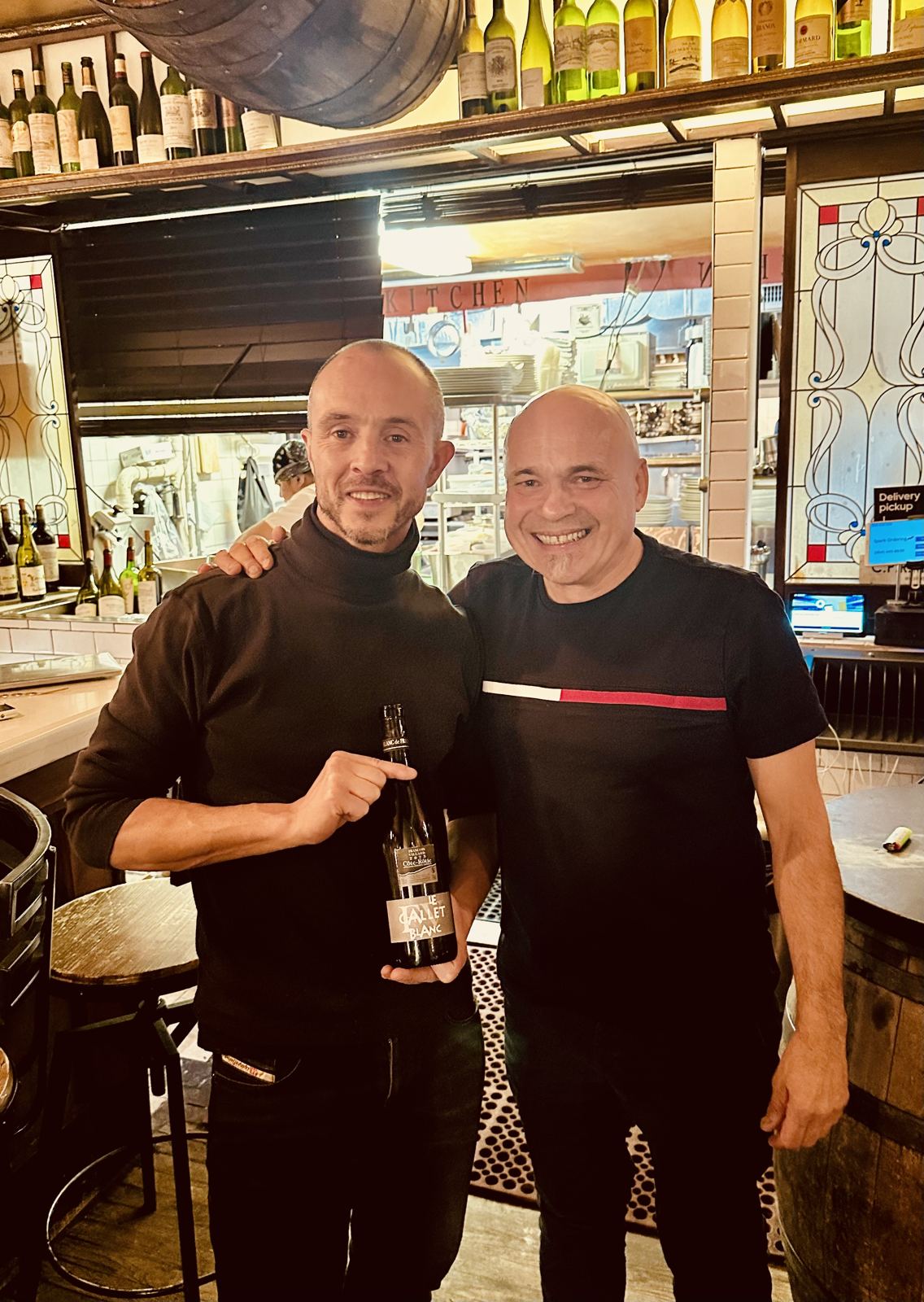
A former chef who planted his first vines in Condrieu in 1989 and never looked back — self-taught, and one of a small group (alongside Yves Cuilleron and Pierre Gaillard) credited with reviving Condrieu when the appellation had nearly disappeared. Forty hand-farmed hectares across six Northern Rhône appellations — Condrieu, Côte-Rôtie, Saint-Joseph, Crozes-Hermitage, Cornas, Saint-Péray — on terraces steep enough that everything is done by hand. Certified organic since 2022.
Domaine de la Solitude
One of the oldest estates in the appellation, with family roots tracing back to 1604. Now led by Florent Lançon, the eighth generation, a trained oenologist who took over in 2008 after stints at wineries in Australia and New Zealand. The estate sits on La Crau, one of Châteauneuf-du-Pape's most prized sectors, with vines split across galet-covered pebble soils and sandier safres terroir. Organically farmed, and built on the classic Grenache-Syrah-Mourvèdre backbone the appellation is known for — history in a bottle.
Domaine Bachey-Legros
Six generations of the Bachey-Legros family on one of the oldest streets in Santenay-le-Haut, now run by Christiane Bachey-Legros and her sons Lénaïc and Samuel. A small, quietly excellent estate — roughly 18 hectares across Santenay, Chassagne-Montrachet, and Les Maranges, with old vines averaging 55 years (one plot pushing 80). No flashy certification, just patient, traditional Burgundian farming and old-vine concentration. Exactly the kind of small grower this list is meant to make room for.
Domaine Chevrot
Family in Maranges since 1830, now run by brothers Pablo and Vincent Chevrot. Certified organic, and farming biodynamically (uncertified) across 18.5 hectares, plowed in part by their two horses, Valentine and Corléone. Minimal intervention in the cellar — no enzymes, no acidifying or chaptalizing, reds see no sulfur until bottling. Distinctive, terroir-driven wines from an appellation most people couldn't point to on a map.
Domaine de Bellivière
Éric and Christine Nicolas rebuilt a derelict farm in the Sarthe into one of the Loire's most respected estates, now joined by son Clément. Certified biodynamic since 2008, farming some of the most obscure, northernmost vineyards in France. They also run a négociant project, Les Arches de Bellivière, born from a run of brutal frost years — a way to keep making biodynamically sourced wine even when their own harvest is wiped out, working with rare grapes like Pineau d'Aunis alongside more familiar varieties. Native yeasts, no filtration, real character.
Château Sainte Roseline
A working vineyard since the 14th century, built around an abbey where Roseline de Villeneuve served as Mother Prioress before her canonization — her relics still rest in the estate's chapel, a listed historical monument. Named a Cru Classé in 1955, one of only eighteen in Provence. Run since 2011 by sisters Aurélie Bertin and Delphine Meunier, among the few family-owned Cru Classé estates left in the region. Certified organic since 2022, on clay-limestone soil fed by a natural spring. History and rosé, in equal measure.
Mongarda
Bruno Tormena went full-time as a vigneraiolo in 1978, learning the land from his grandfather; his son Martino, a graduate of the Conegliano enology school, has run the estate since 2011. Small, family-farmed, nature-oriented Prosecco — real Col Fondo, unfiltered and sur lie, alongside a still-wine bottling as well. Our entry point into Italy, sourced through a distributor relationship Jerome has held for years.
🍇 Pending a final tasting before it's locked in.
Guidobono
The Faccenda family bought this estate in 2003, chasing a long-held dream of one day making real Barolo. Vineyards split between their home base in Castellinaldo, Roero, and a parcel just outside Monforte d'Alba — one of Barolo's most prestigious communes — on 30-40 year old vines over limestone soil. The range runs the full Piedmont lineup: juicy, approachable Barbera; austere, structured Nebbiolo; traditional, age-worthy Barolo.
Ancarani
Family land since 1934, now farmed by Claudio Ancarani and his wife Rita Babini on just 10 hectares near the 15th-century fortified site of Oriolo dei Fichi. Certified organic, recognized by Slow Wine. Claudio has made it his mission to champion rediscovered indigenous grapes almost no one else grows — Centesimino (made by only 8 producers in the entire region) and Famoso, an Etruscan-era variety traced back to the Aegean. One of Jerome's longtime favorites.
La Zerba
Founded in 1973 by Livio Lorenzi, now run by daughter Grazia, her husband Andrea, and their son Luigi. The name means "uncultivated place" in the local dialect — a nod to the land's wild roots and the family's respect for it. Ten hand-farmed, certified organic hectares in the Ligurian-Piedmont Apennines produce Gavi with real texture and depth, more Burgundian than the grape typically shows. A longtime favorite Jerome is bringing to French Therapy.
Andrea Occhipinti
Not to be confused with the Sicilian Occhipinti — a genuinely unrelated producer with the same surname. Andrea discovered these volcanic-soil vineyards on Lake Bolsena while studying at university in Viterbo; his research into the region's forgotten native grapes became his master's thesis, and in 2004 he founded the estate. Just 4-5 certified organic hectares. He's the first winemaker in Italy to vinify Aleatico di Gradoli — historically a sweet passito grape — completely dry. Native yeasts, amphora and stainless steel, minimal sulfites.
Polvanera
Filippo Cassano founded this estate in 2003, betting everything on "pure vinification" — no oak, letting old-vine fruit and terroir do the talking. The name means "black dust," for the dark soil surrounding the farmhouse, where Primitivo bush vines date back to the 1860s. 120 certified organic hectares growing an unusually wide range of Puglia's native grapes, aged in a cellar carved eight meters into limestone rock. Six consecutive years of Gambero Rosso's Tre Bicchieri.
Clos du Val
Founded in 1972 by John and Henrietta Goelet with winemaker Bernard Portet, who spent two years searching the world for a site that could rival Bordeaux before landing on what would become the Stags Leap District. Their 1972 Cabernet placed in the legendary Judgment of Paris — and a decade later, in a rematch tasting, came out on top. Never sold in over fifty years, now run day-to-day by grandson Olav Goelet, who recently refocused the estate back to Bordeaux varietals after decades of diversification. A rare thing in Napa: real history, still in the founding family's hands.
Domaine Josmeyer
Family roots back to 1854, with the modern domaine formally established in 1963 by Hubert Meyer — the name itself a blend of his father Joseph's name and their own. His son Jean converted the estate to organic and then biodynamic farming in the late 1990s, certified by 2004, making Josmeyer one of France's earliest biodynamic estates. Since 2015 the domaine has been run by his daughters, Céline and Isabelle — a rare all-female generation in Alsace, both trained in fine arts before Isabelle turned to winemaking. Twenty-eight hectares across ninety plots, including two Grand Cru sites with entirely different soils. Deliberately bone-dry, native-yeast, aged in century-old oak foudres.
Te Pā Family Vineyards
Founder Haysley MacDonald traces his Māori ancestry back 800 years to some of the earliest settlers of the Wairau Bar, where the family's home vineyard still sits. He converted the family's dairy and crop farm into vines in 2003 and launched te Pā in 2011 — one of only a handful of independently Māori-owned wineries in New Zealand, and a founding member of the TUKU Māori Winemakers Collective. Sustainably farmed, and genuinely well-regarded: a Wine Spectator Top 100 placement and praise from the New York Times and Wine Enthusiast, not just a good story.
Hunter's Estate
Founded in 1979 by Ernie and Jane Hunter, among the very first independent wineries in Marlborough alongside Cloudy Bay. Ernie died suddenly in 1987; Jane took over and became one of New Zealand wine's most decorated figures — an OBE, a CNZM, and the first woman inducted into the NZ Wine Hall of Fame. Now led by her nephews James and Edward Macdonald, Hunter's is the only Marlborough winery founded in the 1970s still in its original family's hands. Fully sustainably certified. We're carrying their Otto's Constant Dream bottling.
Allan Scott Family Winemakers
Allan Scott started working in Marlborough's wine industry in the 1970s, back when the region was still unproven, and founded his own family estate in 1990. His son Josh Scott now leads winemaking. Certified sustainable, and genuinely well-reviewed — Wine Spectator's #1 Value Wine of the Year in 2022. We're carrying the Sandy Cove bottling, a longtime favorite, alongside Josh's own-label wines.
Domaine Roger Lassarat
Roger Lassarat founded the estate in 1969 with just seven acres in Pouilly-Fuissé and Saint-Véran; son Pierre-Henri joined in 2010 and now leads it. The vineyards sit between two dramatic limestone landmarks, the Roche de Vergisson and Roche de Solutré, some vines up to a century old. Farmed with real care — no synthetic fertilizers, natural composts, deep tilling — across four appellations spanning Mâcon-Vergisson, Saint-Véran, Pouilly-Fuissé, and a Beaujolais cru, Moulin-à-Vent. One of Jerome's favorites, worked with directly for the past year.
Maison Champy
Founded in 1720, the oldest documented wine house in all of Burgundy — older than Bouchard, older than Drouhin. The house nearly disappeared when the last Champy descendant died out and the name was sold off in 1990, before being bought back and revived by the Meurgey family. Twenty-one estate hectares around Corton, Beaune, Savigny-lès-Beaune, and Pernand-Vergelesses, farmed organically and HVE-certified under technical director Dimitri Bazas, who has led winemaking since 1999. Aged in 15th-century cellars in the heart of Beaune. Jerome has a long-standing relationship with the AdVini team and with Dimitri himself, forged over tastings back at AOC East.
Punset
Family-farmed for four generations, transformed by Marina Marcarino, who began converting the estate in the 1980s and became Italy's first certified organic Barbaresco producer by 1993. She's since leaned further into biodynamics, guided by Masanobu Fukuoka's "do-nothing" farming philosophy — cover crops, minimal intervention, biodynamic preparations over copper and sulfur. Seventeen solar-powered hectares. In 2004 she founded the Vintesa consortium linking Italy's organic winemakers. The flagship Barbera d'Alba is unoaked, hand-harvested, and fermented in small batches specifically to keep it fresh rather than jammy — a good sense of the estate's whole approach.
Folk Machine
Kenny Likitprakong's second label, born in 2005 out of a simple idea: affordable, well-made Pinot Noir that could actually sell. It grew from there into a home for the grapes California mostly forgot — Valdiguié, Charbono, Gamay — sourced from growers across the north of the state rather than from land he owns himself. Fruit is chosen deliberately: organically and sustainably farmed sites, old-vine parcels, low-intervention winemaking throughout. Jerome tasted the skin-contact Chenin Blanc, sourced from century-old Delta vines in Clarksburg, and called it mind-blowing for a California Chenin.
Arnaud Combier
Over two decades into making natural wine, and one of the genuine pioneers of the no-sulfite movement in southern Burgundy. Arnaud farms his own small holdings around Pierreclos, and also runs an unusual micro-négoce project — seeking out small growers with too little land or time to bottle their own wine, on the condition that they farm biodynamically, then working with them directly to bring it to market. Hand-harvested, native-yeast fermentation, little to no added sulfites throughout. Jerome tasted his organic, sulfite-free Chardonnay and came away impressed.
Jean-Michel Gérin
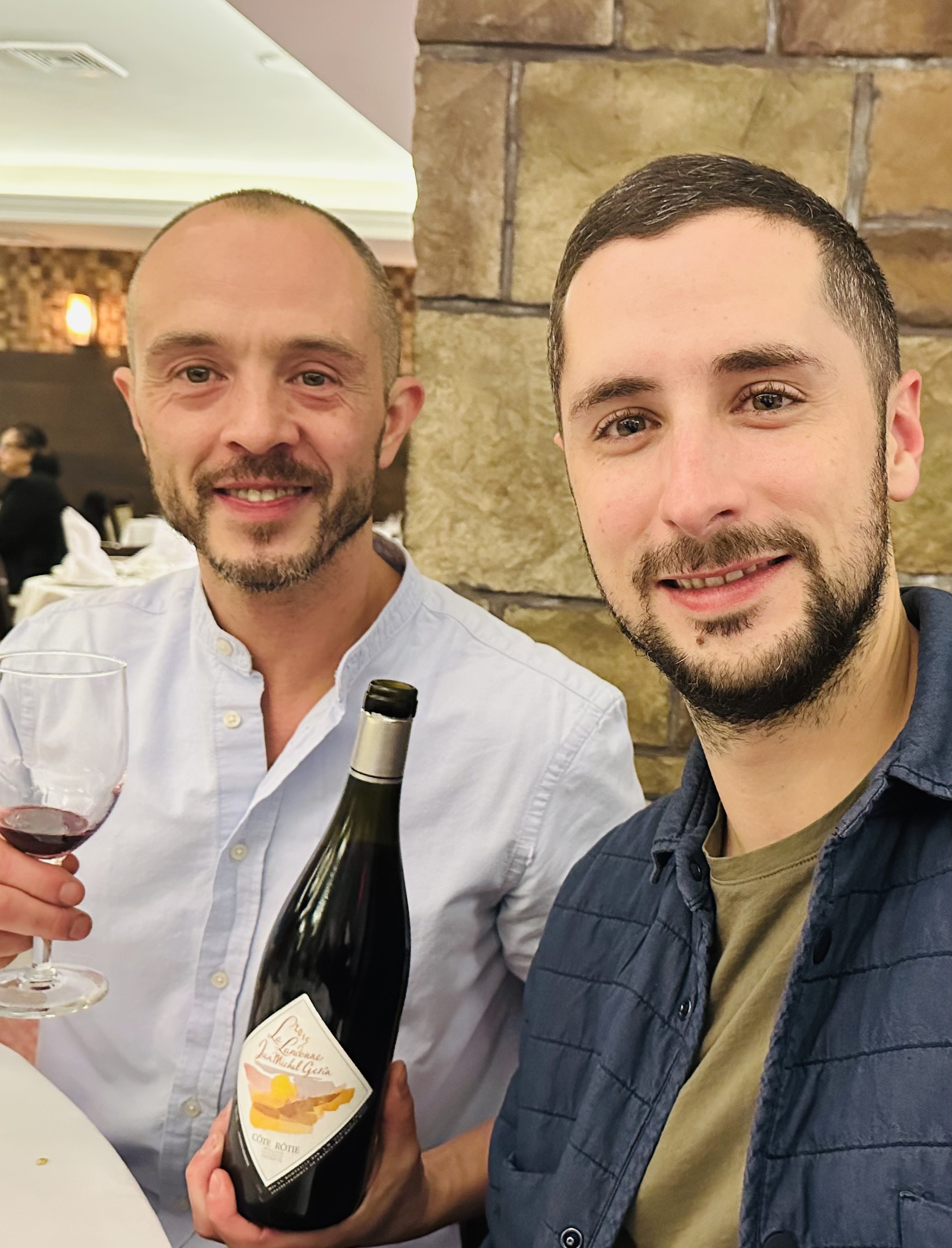
A multi-generational Côte-Rôtie estate in Ampuis, now carried forward alongside the next generation. Jerome connected with Alexis Gérin over a bottle of the family's Côte-Rôtie — the kind of relationship, built one glass at a time, that shapes what ends up on our shelves.
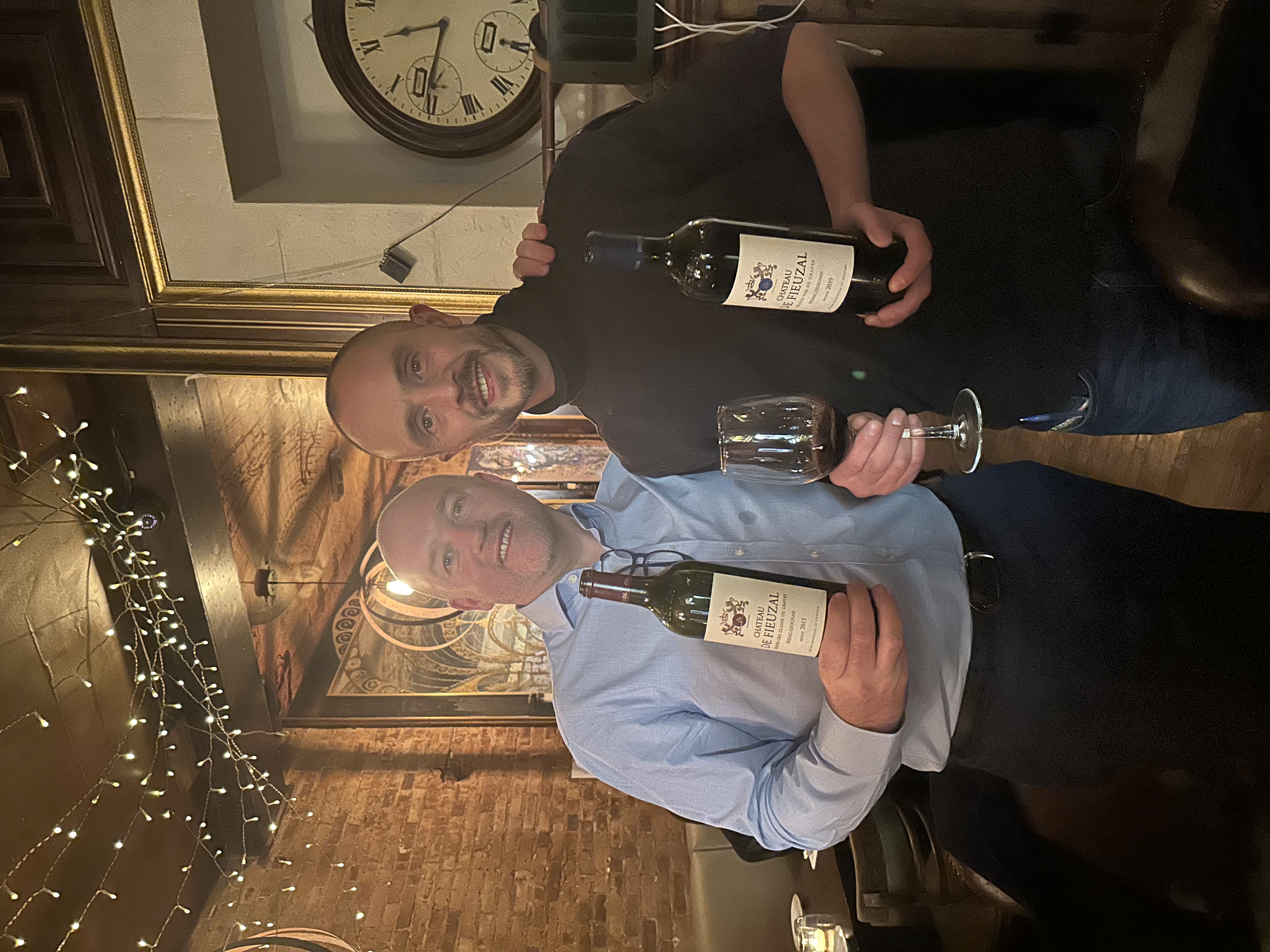
Château de Fieuzal
A Pessac-Léognan estate in Léognan, at the heart of Bordeaux's Graves — its white classified Cru Classé de Graves in 1959. Gravel-driven, structured reds built around Cabernet Sauvignon, alongside a benchmark Sauvignon Blanc–Sémillon white. Classic, age-worthy Bordeaux of the kind that anchors a list.
Maloof
Founded in 2015 by Bee Maloof, a former aerospace materials engineer, and Ross Maloof, who spent a decade running a plant-based restaurant in Philadelphia. In 2019 they took over No Clos Radio, a vineyard in the Tualatin Hills at the northwest edge of the Willamette Valley first planted by Harvey Shafer over fifty years ago — one of the oldest commercial sites in the region. Certified organic, partly dry-farmed, own-rooted vines, all in service of a simple goal: white wine that captures place and time. Their Pinot Gris ferments on its skins for three weeks, best known in the blend Where Ya PJ's At? — 80% skin-contact Pinot Gris to 20% Riesling.
Day Wines
Founded by Brianne Day in 2012, after eight years spent traveling to roughly eighty wine regions across four continents and working harvests in Burgundy, Argentina, Australia, and New Zealand. Day Wines owns no vineyards of its own, sourcing instead from a small circle of Oregon growers farming organically, biodynamically, or sustainably across the Willamette and Applegate Valleys. Wild native-yeast fermentations, whole-cluster ferments for aromatics, and minimal sulfur added only after malolactic conversion — plus a co-fermentation technique Brianne pioneered in Oregon, blending multiple varieties in the same tank since 2014. Pinot Noir, Tannat, Malvasia, Côt, and Viognier all pass through her Dundee winery, each one built to express a single site with as little intervention as possible.
Domaine des Moriers
Born in 2005 from an unlikely friendship: François de Nicolaÿ, raised among the vines at his family's Burgundy estate Chandon de Briailles, and Dominique Cor, a digital-industry veteran drawn in after tasting a 1953 Château Margaux. They started with a single plot in Moulin-à-Vent and, in 2018, took over a winery in Lancié to expand across Beaujolais' crus. François followed his mother's path into biodynamics, unhurried and deliberate, and after nearly two decades of organic farming the estate earned Ecocert certification in 2023. Their Gamay is vinified naturally in cement vats — no chaptalization, no commercial yeast, minimal sulfur — letting each cru's granite and schist soils speak plainly.
Le Clos Galerne
Cédric and Myrtille Bourez purchased their domaine in Rochefort-sur-Loire in 2018, inheriting a scatter of old-vine holdings above the Layon river. They've farmed organically from day one, certified three years later, tilling minimally so cover crops can build organic matter between the rows. What began as seven hectares has grown to twelve, spread across Anjou Noir, Pierre Bise, Moulin Brûlé, Savennières, and Chaume — slate, volcanic rock, schist, and sand, each plot kept and bottled apart. The focus throughout is Chenin Blanc in its many registers, including a Savennières from vines a century old, native-yeast fermented and aged eleven months in used 400-liter barrels.